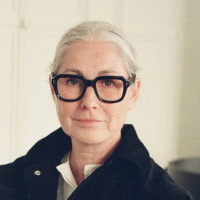







Dr Tara Swart
the neuroscientist teaching us that the difference between surviving and thriving is something you can actually train your brain to do.
- Shop 8
- Learn 0
- Guide 0
- Events 0
This week on Semaine we're calling the doctor. Medical doctor, neuroscientist, author and Chief Science Officer at Heights she's calling in from self-isolation in the nick of time with practical tips and tools to help us thrive rather than just survive these turbulent times.
Listen
Read the Story
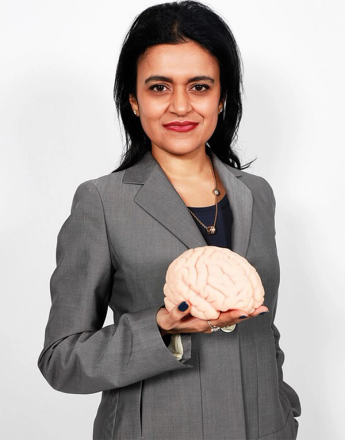
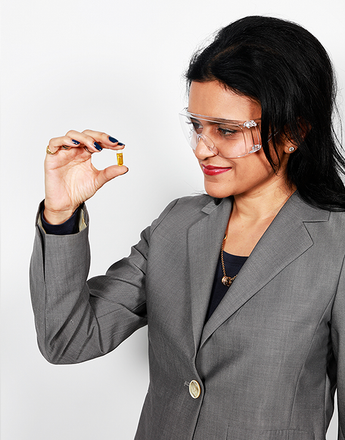
Ours is a turbulent century. Semaine decided to call up the doctor for a prescription, formulated just for this period in which we want to thrive, rather than merely survive, or struggle through. Enter Dr. Tara Swart: a neuroscientist, award-winning author, psychiatrist, doctor, and the chief science officer of Heights, the world’s first plant-based ‘smart supplement’ designed to boost your brain power, keep your memory sharp, and safeguard your emotional wellbeing via the intelligent daily delivery of 18 key nutrients. It’s the kind of pill a lot of us could use always, but especially in the 21st Century—as an alternative for medication or a quick fix, but as an extra gentle helping hand to support anxious, heavy heads overwhelmed by the news.
“[At a time like this] your inner strength, and the quality of relationship you have with yourself before others, is the difference between surviving and thriving.

Swart has pioneered a number of scientific breakthroughs over the course of her career, including how the law of attraction works (hint: it works!) and how the ancient tools of manifestation can successfully propel us towards a balanced state of confidence and personal fulfillment. Her findings—along with her library of science-backed practical tips—carry a special message of hope in light of today’s fragile climate: “With a change in pace, and by ensuring less mindless distraction, we can really apply our magnetic desire to the truly important things in life,” she says. “[At a time like this] your inner strength, and the quality of relationship you have with yourself before others, is the difference between surviving and thriving.
“Be mindful of what you are experiencing physically, mentally, emotionally and spiritually, and that others will be going at their own pace.”
All of these are things that can be nurtured due to the tremendous power of neuroplasticity—aka the ability of the brain to change itself.”
With this in mind, Semaine consulted Swart for a cheatsheet to help tackle modern life with positive perseverance. In response to the feelings of anxiety and fear of the new century, Dr Swart said: “It is important to acknowledge your feelings and keep moving through the curve. If we get stuck in one area it takes longer to get to the end. But, people will move through it at different rates, and we may all have to repeat this cycle several times. Be mindful of what you are experiencing physically, mentally, emotionally and spiritually, and that others will be going at their own pace.”

The spectre of change can often be the engine of innovation, and we are, according to Dr. Swart, “at the start of a big change….The Kubler-Ross Change Curve [a model developed by scientists in the 1960s to measure grief-related emotions] indicates that we will go through shock and denial, anger and fear, depression, bargaining and trying to find meaning, and—finally—acceptance with the ability to move forward.” It’s helpful to understand the brain’s chemistry, to have an objective view of the spiralling that occurs within when we experience a stress response: “This can lower our physical immunity making us more susceptible to common ailments, and it also re-routes the blood supply in the brain away from the higher centers, and down to survival mode.”
“We must give our brain-body system the rest, fuel, oxygen, and sense of belonging it needs.”
To Dr. Swart, we exist all too often in this survival mode. To lift ourselves out of it, we must “give our brain-body system the rest, fuel, oxygen, and sense of belonging it needs.”
What, then, is Dr. Swart’s verified recipe for life, if you will? Her way of thinking teaches us to listen to the body, as well as lean on a few outside sources of comfort. She suggests: “Apart from good quality and length of sleep, eating a nutrition-dense diet and taking supplements, drinking plenty of water and minimizing alcohol and caffeine, and being physically active, I particularly rely on yoga, meditation, reflexology and magnesium baths to combat stress.”
By Elsa de Berker for Semaine.
Photography by Casey Lazonick.