





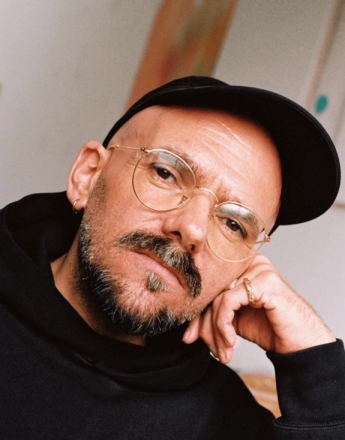
Ryan Gander
the artist has never been afraid to set tongues wagging. Enter his Suffolk studio where curiosity and human cognition collide.
- Boutique 8
- Apprendre 1
- Guide 8
- Événements 0
Ryan Gander shares his peculiar Suffolk studio, where getting lost is embraced and transformed into art "stuffs."
Read the Story

“Every child is an artist, the trouble is remaining one when they grow up.”
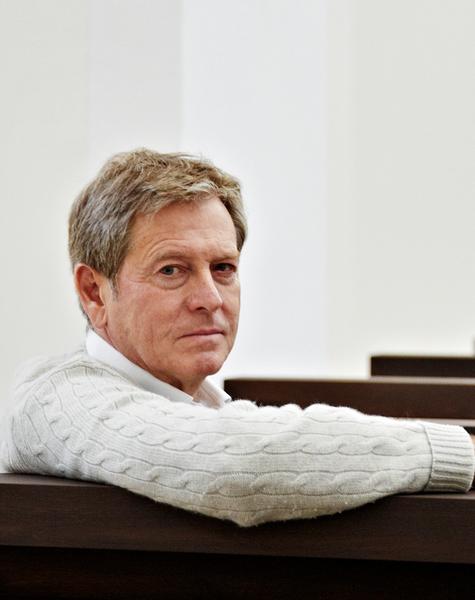
On one flank of the building housing Ryan Gander’s studio in Suffolk is a collection of a dozen fire alarms. Safety regulations stipulate that only one is needed, but the artist thought it would be funny “just to have lots of them”. Gander’s studio is full of such idiosyncrasies: one is never quite sure whether they’re looking at a design quirk, or actual work of art. At first glance, the vending machine in the entrance hall looks just like any other vending machine, until you inspect it more closely and realize the items for sale are mousetraps, Zinc supplements, weed, miniature bottles of Famous Grouse, and what Gander affectionately calls “a male pleasure device”.
Gander has set tongues wagging with vending machines before.In 2019, he made headlines at Frieze London with one that dispensed items at £500 a whirl: Jesmonite cast editions of affordable digital watches, rocks collected during walks with his children, cast rolls of cash, and the key card to a room in the London hotel where the artist was staying at the time. Some would win, some would lose, and the artwork almost seemed to laugh at its own premise.

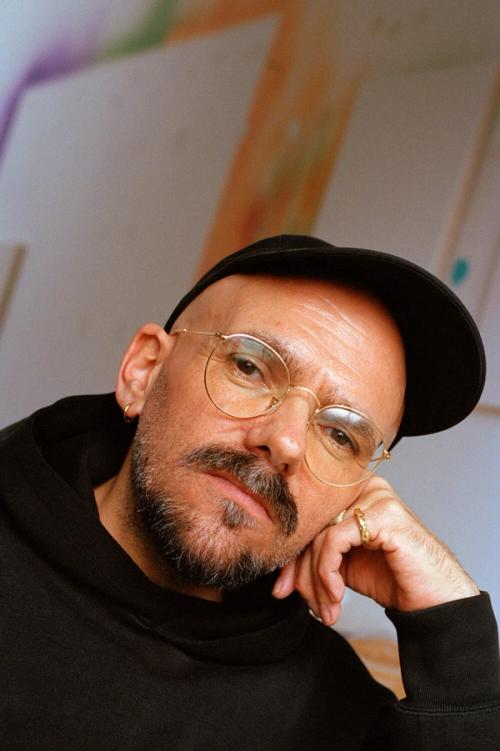
Humour and ridicule lie at the heart of Gander’s work: other emblematic pieces have included a life-sized animatronic gorilla, crouched under a desk (School of Languages, 2023), and a reedited BBC documentary in which Gander becomes gradually more soiled and dust-covered (Dancing with My Own Agencies, 2018). His chief fascination is the complexity of human cognition. Gander was born in Chester, in the north of England, the son of a planning engineer and teaching inspector. He studied Interactive Arts at Manchester Metropolitan, returning to Chester briefly to work in a carpet shop before heading to Maastricht, working as a Fine Art research participant. He began showing his work during residencies and became Cocheme Fellow at the Byam Shaw School of Art in London, later winning the Baloise Art Prize at Art Basel in 2005 — a trophy awarded for works in the ‘Statements’ rubric.
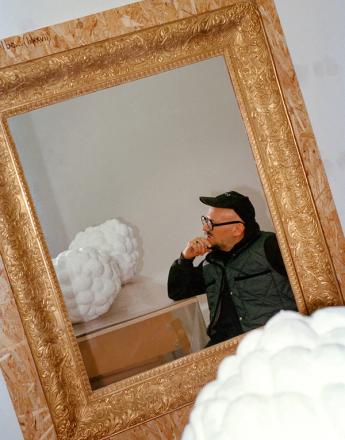
Since then, Gander has become one of Britain’s most renowned contemporary artists, and his work has been shown at the Museum of Contemporary Art of Chicago, Paris’s Palais de Tokyo and the New Museum in Manhattan, New York. Gander refutes the “conceptual” label that has often been applied to him by critics, preferring instead to call himself a “neo-conceptualist” or “amateur philosopher”. The first work to bring him notoriety, if such a term can be used, was a lecture series, Loose Associations, in which the artist wove together disparate, anecdotal takes on art, design and language, gesturing towards a larger, overarching meaning. Simple fragments can only clutch at straws, yet are also the only means we have to reach for something greater than ourselves. This duality lies at the heart of the artist’s oeuvre.

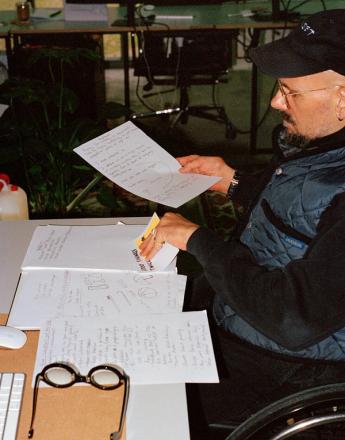
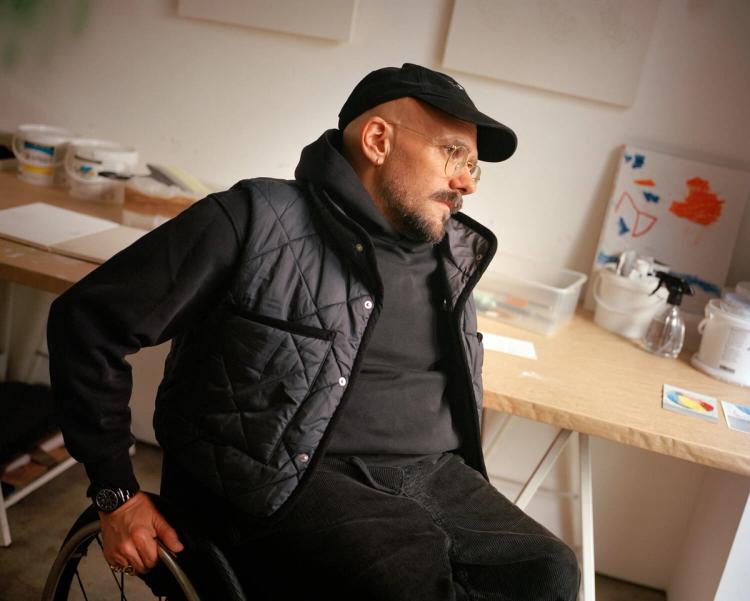
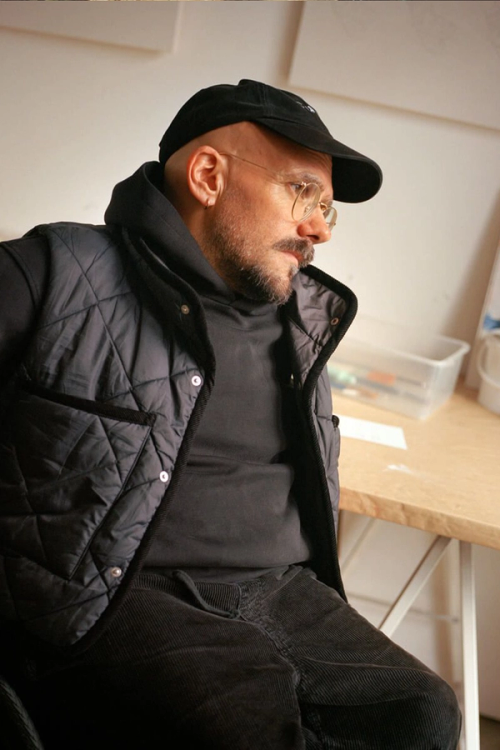
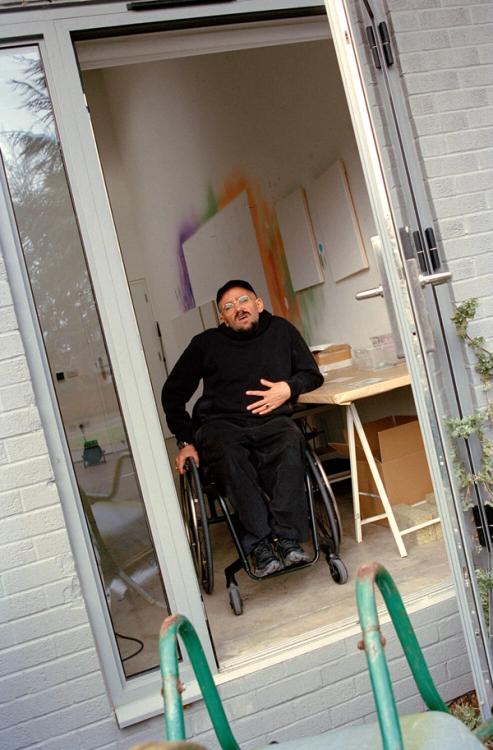
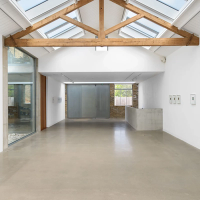
Gander’s vast, sprawling studio in Melton, Suffolk, where he set up camp after years spent working in east London, used to be the local registry office, where births, deaths and weddings were recorded by the authorities. “It’s kind of a spiritual building,” he says, nodding to the deliberately misspelt “I Love Chester” postcard, a paean to both his origins and his practice (playful, to the last). The artist’s move to the country was prompted by a growing family and a desire to escape what he saw as London’s frenetic pace. “When I was in London, I used to wheel myself around really quickly, because it felt like that was what you did if you were ambitious,” he told The Guardian in 2023.
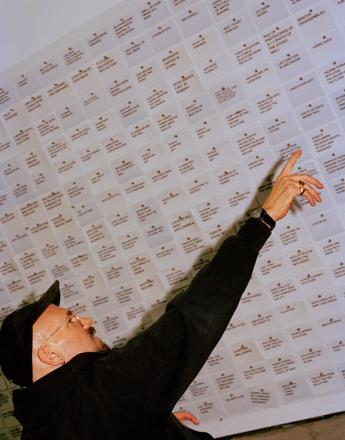
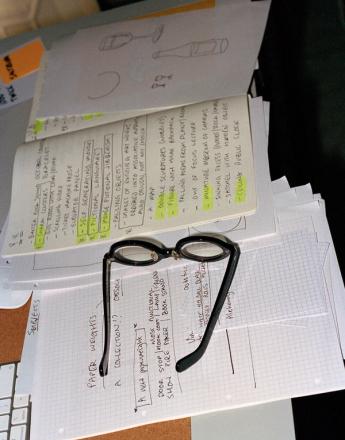
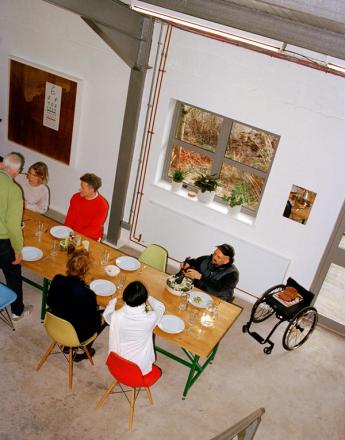
“Here I take time to go the wrong way, and get lost.” One could easily get lost in Gander’s studio, too. Every room unfurls to reveal another, perhaps smaller, perhaps bigger but also starkly different. Past works by the artist occupy several of the rooms while one is dedicated to his obsessive archiving practice (Gander uses index cards to store his ideas for future shows, and organise them). He shares the studio with other artists, and all of them sit down together to eat lunch every day. The food is prepared by a woman called Wendy, a name she shares with an American fast food joint, prompting Gander to append a Wendy’s logo on the side of the building, a wall away from the kitchen. The vibe is convivial: Gander frequently opens up the studio to the neighbourhood’s kids, who, he says, describe it back to their parents as a madhouse.

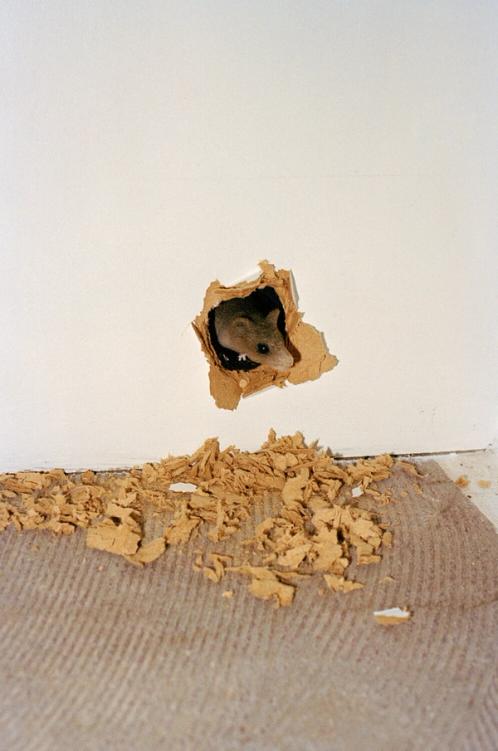
The artist shows us his car, parked just outside, which he says replaced “the Tesla” he sold “when Elon Musk declared he was a Nazi”. He puzzledly asks, “When is Lent?”, when that particular conversation comes up (we meet the day after Ash Wednesday). We wind up at the vending machine, where he talks us through its origins. What is his favourite item in it? “The weed,” he answers. “I wouldn’t do it though. It’s been in here for years.” Gander tells me that he is not interested in art as “stuff” (or, he says, “stuffs”), but rather as a means of measuring the world through the experience of seeing and producing. His work is deeply physical and tangible, yet much of it hinges on transience. One of his most famous pieces, a version of which currently occupies a corner of the main hall in his studio, is an animatronic mouse darting in and out of a hole in the wall, teasing us with its presence.

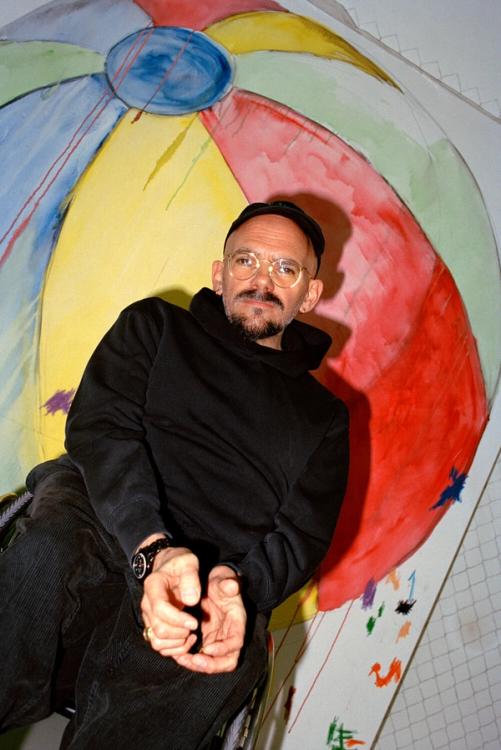
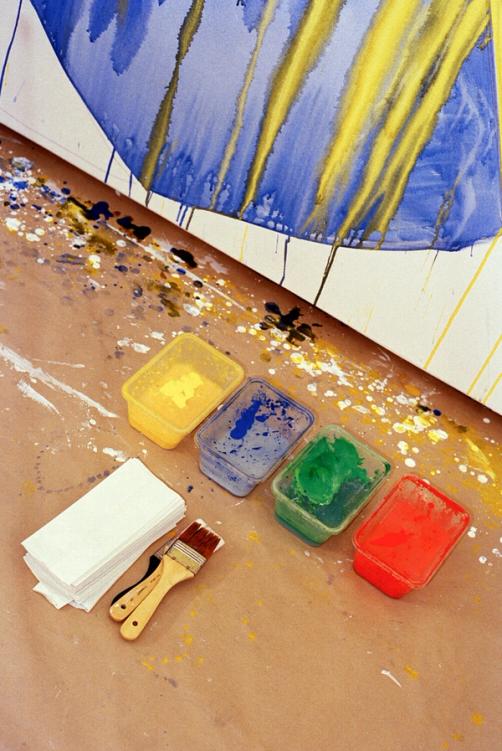
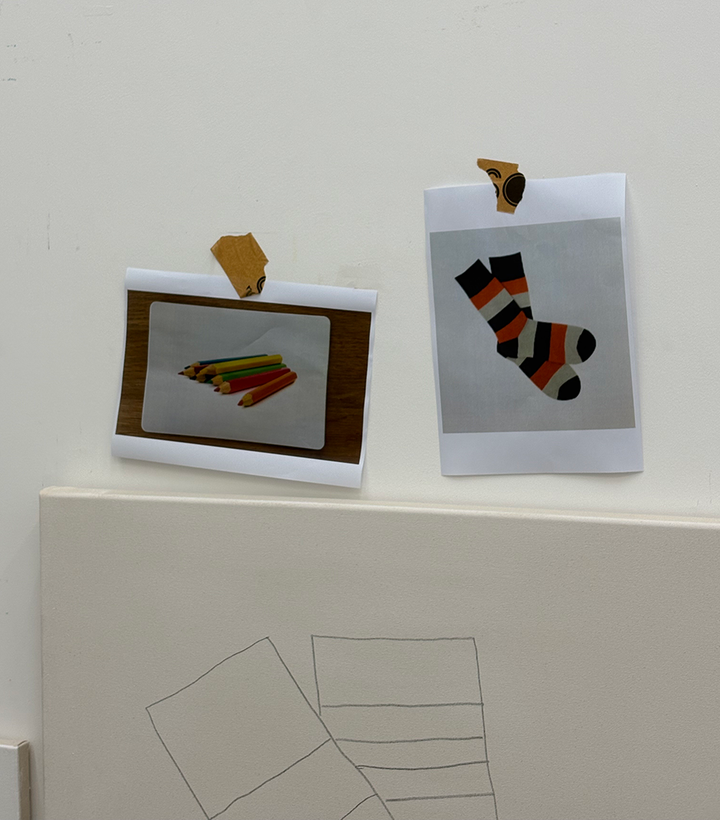
The animal attempts to deliver a speech using the voice of the artist’s nine-year-old daughter (“I… I… I…”) who stammers with her words, not quite knowing how to begin her sentence or what exactly to say. Gander has himself collected a fair few artworks throughout his life, most of which are now with his ex-wife. The artist got divorced last year and is sparing about the details. He has a therapist, to whom he writes “typographical tears”, and started drinking caffeine again after a four-year hiatus. “I’m off the sugar, though,” he says. Monotony seems to bore him. “I’ll swap some of my works in my house with those of my mates so we can rotate them around our homes,” the artist says. For the first time in his career, Gander is turning his attention to painting, a medium he’s approached through his role as a father to an autistic and non-verbal eight-year-old son, Baxter.
“Every child is an artist,” Picasso once said (“the trouble is remaining one when they grow up”). One of Baxter’s preferred means of communication is drawing shapes and colours on paper which his father began doing alongside him, curious to see whether they could establish a kind of dialogue through shared practice. The seed grew from there, as did Gander’s large watercolour canvases, some of which bear Baxter’s literal imprint. These will be unveiled to the public this summer for the first time at an exhibition in Salzburg. Gander has previously spoken about how being a father is an artistic education all its own. “The trouble with adults,” he says, “is that the valve of creativity in their brain is quite closed off” — unlike in children.
“Your imagination is a muscle.”
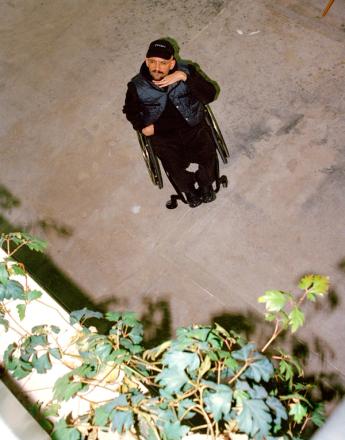
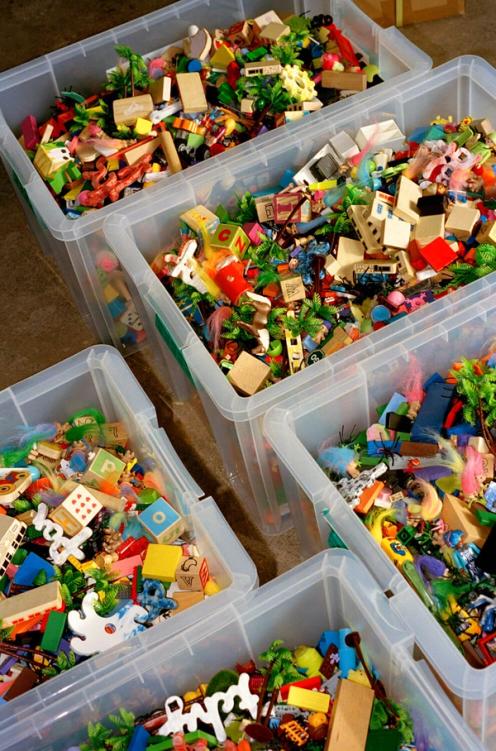
“When you throw a towel over a chair to simulate a house for your kids, and your kids believe that’s a house, they really believe that’s a house. Their imagination is so on fire that they don’t have to suspend disbelief.” Gander’s own imagination stems from a childhood where he had to use his own mind to escape the agony of growing up in hospital. He was born with a severe brittle bone condition and still uses a wheelchair to get around. “Your imagination is a muscle,” he says. “If you’re in a bed in a hospital ward and can’t get out or go to school or other kids’ birthdays, cognition compensates for that sort of thing and your imagination prototypes versions of the experiences you can’t have.” Mementos of childhood have previously populated his work: in 2024, at Esther Schipper Gallery in Berlin, Gander covered the floor in kids’ toys, lined up in multicoloured rows of different lengths yet perfectly parallel, and forming a wavelike formation.

Gander called it: “This Is Feeling All Of It.”
An optimist, the artist sees his own compromised childhood as having equipped him with the best of both worlds: the imagination of a child and the cognition and linguistic acuity of an adult. “Because I socialized more with adults than with kids,” he recalls, “my language developed a lot more quickly than that of other children. I also became a good negotiator.” Where does he get his best ideas? “In the car or in the shower.” Gander became a Royal Academician in 2022 when he was elected to the category of sculpture. “When I first told my dad, who was an engineer, that I wanted to be an artist, he didn’t react as most parents do but by telling me: ‘That’s not so different from my job at the factory’,” he says.

His father cited a renowned British artist who’d been “doing the same thing for the past 30 years” (Gander later says who, off the record), and the son swore that he would never do the same thing twice. Gander’s studio is a testament to the sheer scope, abundance and variety of his oeuvre, unfolding over a space that’s more than 800 square metres and on multiple levels. “Art is the only place in society where you can do all the mad shit,” he says, “the kind of shit that, if you were to do it outside of art, you would be classified as clinically mad, and probably be hospitalised.” He regulates his screen time by “having kids”, “who I want to set a good example for, at least eight-to-nine days a month.” His favourite book from recent years was Perfection by Vincenzo Latronico, which chronicles the ennui of a millennial expat couple living in Berlin.
The novel sets up a picture-perfect narrative of liberal elites only to reveal how rotten that narrative really is. “You realise when reading their descent into a kind of hell that your life is kind of hell, too,” the artist muses. “It’s a very compromising book.” Gander read Perfection while he was on holiday in Centre Parks, “because I’m a bit scally like that”, and reached out to Latronico via Instagram to tell him how much he liked the book. “He answered by saying, ‘Ryan! It’s so nice to hear from you after all these years!’ I was like, ‘I don’t know ya’ — but turns out I did know him. I worked with him about 15 to 20 years ago.” As Semaine’s latest tastemaker, Gander and I meet while filming his answers to the Proustian questionnaire that has been tailor-made for him. I catch him between takes to ask him additional questions and to try and obtain a picture of the man off-camera. What is Gander like when not in performance-art mode? Where does Gander The Artist end, and Gander The Man begin?

I’m not afforded much of an answer. While discussing his upcoming show, Gander takes his own camera and begins to photograph me and other members of the team. Someone mentions that he is the first of our Tastemakers to try and flip the thing on its head and get a picture of those filming him. “Well, that’s ‘cause the others are all fucking narcissists, aren’t they?” he responds.
By Will Hosie for Semaine.
Photography by Sophie Green.

Listen
Gallery


Store
Travel

"Only true volcanic source onsen in the basement"
The Prince Park Tower Tokyo
Tokyo, Japan
Shiba Park, Tokyo, Japan
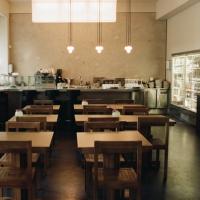
"My old local dating for 50’s for Oysters and Guiness."
The Dresden Restaurant & Lounge
Los Angeles, United States
1760 N Vermont Ave, Los Angeles, CA 90027, USA

"Where I spent my teenage years, most of my ‘firsts’ happened on the banks of this river."
Queen's Park Bridge
River Dee, Chester, United Kingdom

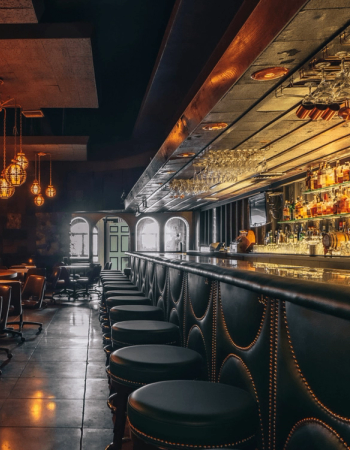
"Any cocktail in here, run by three very old friends, the ‘Waterfall Brothers'."
Take Five Maastricht
Maastricht, pays-bas
Bredestraat 14, 6211 HC Maastricht, Netherlands
Digest
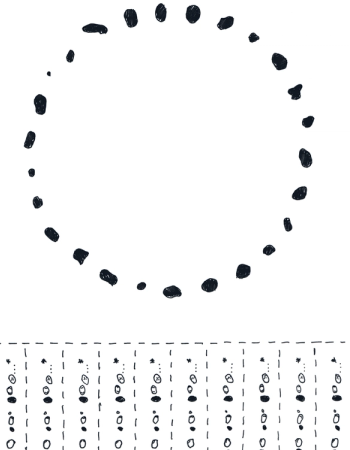
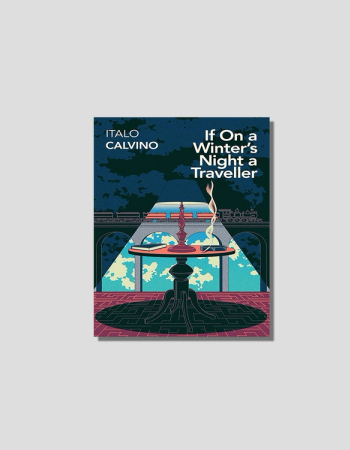
A recursive narrative in a story about multiple stories, exuding meta-ness.
If on a Winter's Night a Traveller by italio cavino
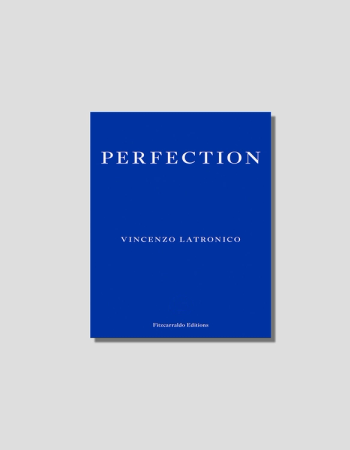
"Compromisingly, a story that makes me question what is of value to me."
Perfection by Vincenzo Latronico

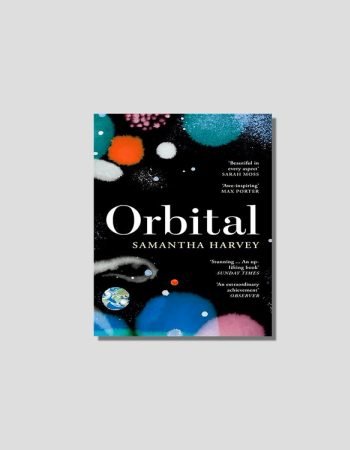
"Perspective, Alan Kay, a pioneer in computer science once said ‘A change in perspective it worth 80 IQ points’, this book reminds me that there is always another viewpoint."
Orbital by Samantha Harvey
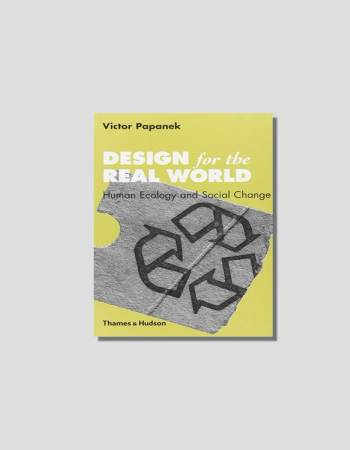
"Reminds me that all technology is only as intelligent as its maker."
Design for the real world; human ecology and social change by Victor Papanek

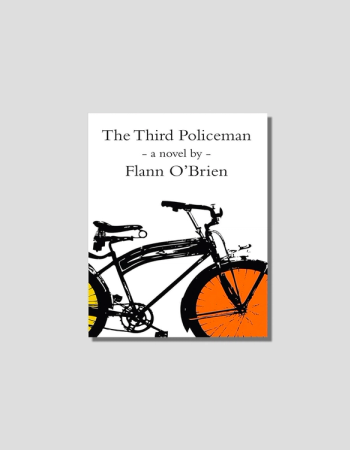
"Reminds me to embrace illogic and absurdity."
Third Policeman by Flann O’brien
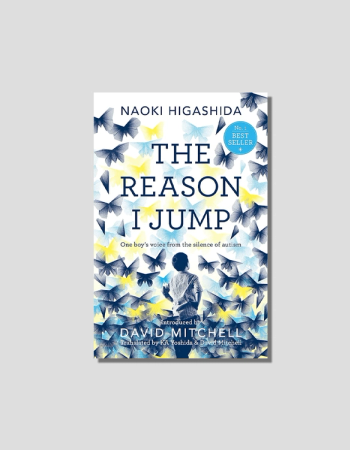
"It reminds that some of the best conversations are subvocal."
The Reason I Jump: one boy's voice from the silence of autism by Naoki Higashida
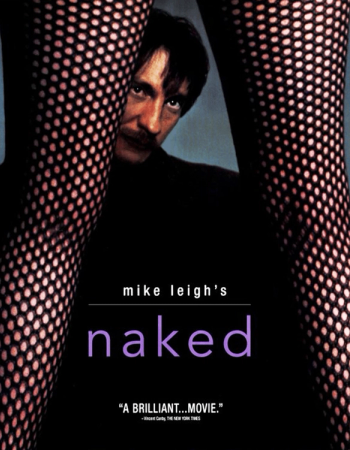
"One of the greatest film ever made."
Naked directed by Mike Leigh
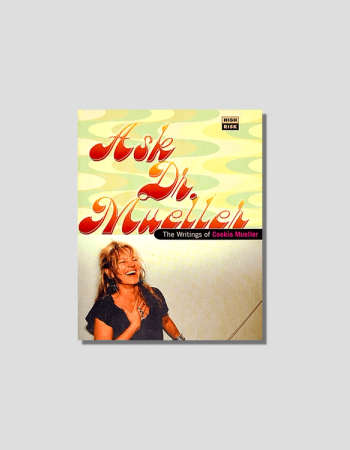
"Reminds me of a younger impulsive self."
Ask Dr. Mueller: The Writings of Cookie Mueller by Cookie Mueller
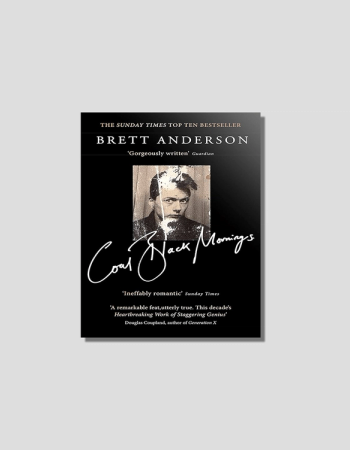
"Because either drags me by the scruff of the neck back into the nostalgia of being an art student."