







Mickalene Thomas
an artist whose bold portraits of Black women have redefined beauty, visibility, and representation in contemporary art.
- Boutique 7
- Apprendre 1
- Guide 14
- Événements 0

Read the Story

“The gaze to my work is unapologetically a black woman’s gaze loving other black women”
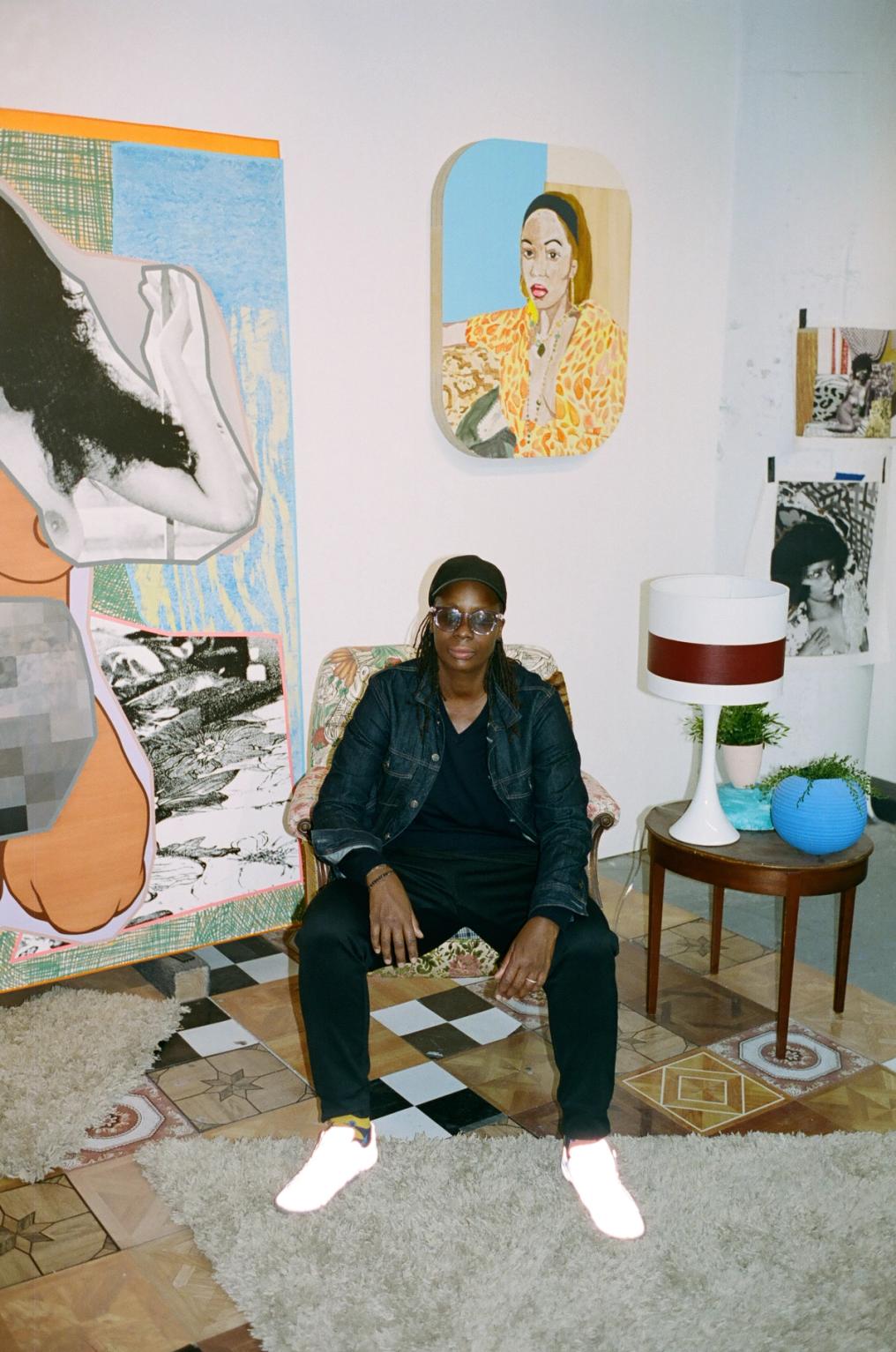
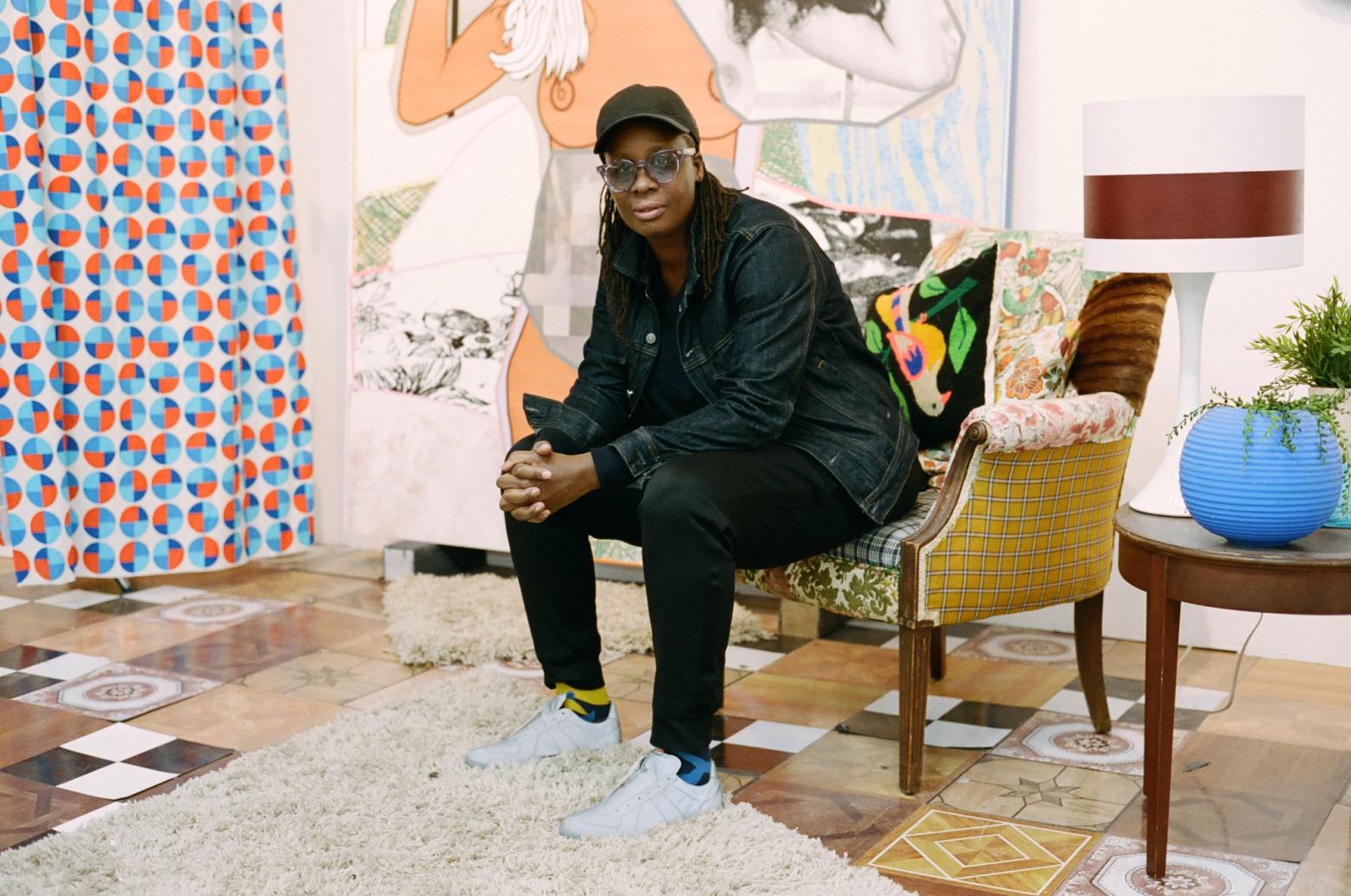
Mickalene Thomas is a shifter of perception. The African-American artist’s multidisciplinary works, carving a space in art history through celebrating black femininity and sexuality, encompass everything from race and power to beauty and the gaze. Her work is at the intersection of seeing and being seen. The women she features, with Naomi Campbell among them, as well as an oeuvre of friends, family and lovers, exude a self-assurance that captivates their viewers “demanding to be seen and acknowledged.”
Her work emerges from a discourse that combines art-historical, political and pop-cultural references through the lens of black and female identities. Mickalene aims to blur the distinction of object and subject, concrete and abstract, real and imaginary. The modes through which culture serves to shape perception across social, spacial and ideological platforms is fundamental to her investigations. Shaped through portraiture, her explorations introduce complex notions of femininity, beauty, sexuality, and challenge common definitions of beauty and aesthetic representations of women.

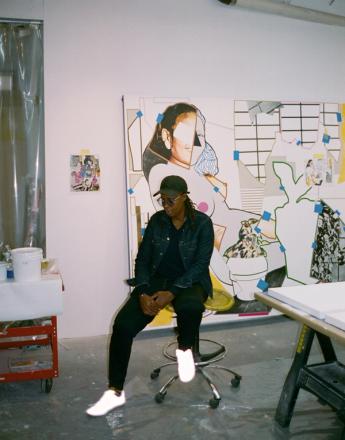
“The gaze to my work is unapologetically a black woman’s gaze loving other black women,” she says with a laugh that fills her studio in a video for Art Basel. Her subjects’ only objectification is her desire to emulate their femininity, her wanting to possess that and embody it. “It is all about how they want to present themselves,” she says. Her black muses subsist as influential figures that characterise the subjective, and often otherworldly, propositions that Mickalene envisions.
Her mother, Sandra Bush, is a significant one. Many of her works display the magnetism of her charismatic 6 ft 1in mother, standing in her soft-spoken, statuesque strength. Even an epiphany in her pathway to art was seeing African-American artist Carrie Mae Weems’s images of a mother and daughter which she remembers as probably the first time she ever saw herself in art. The following day, she walked into an art-supply store, and the rest was (art) history.

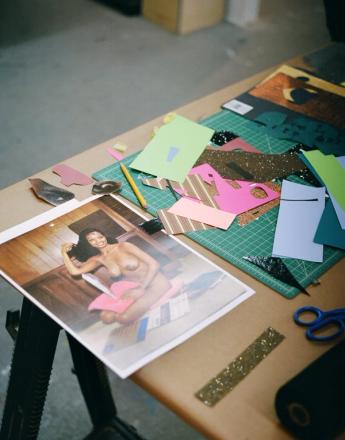
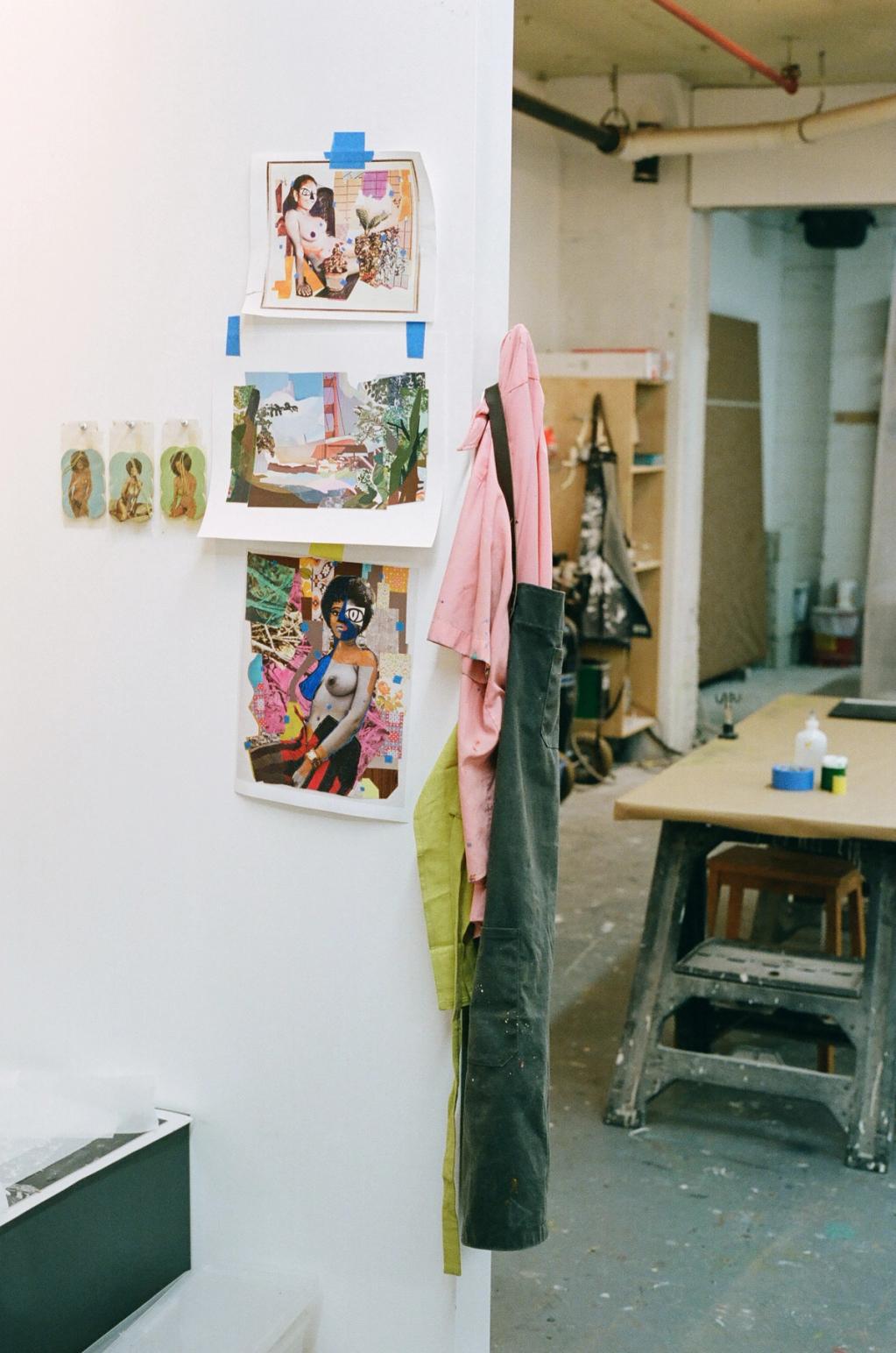
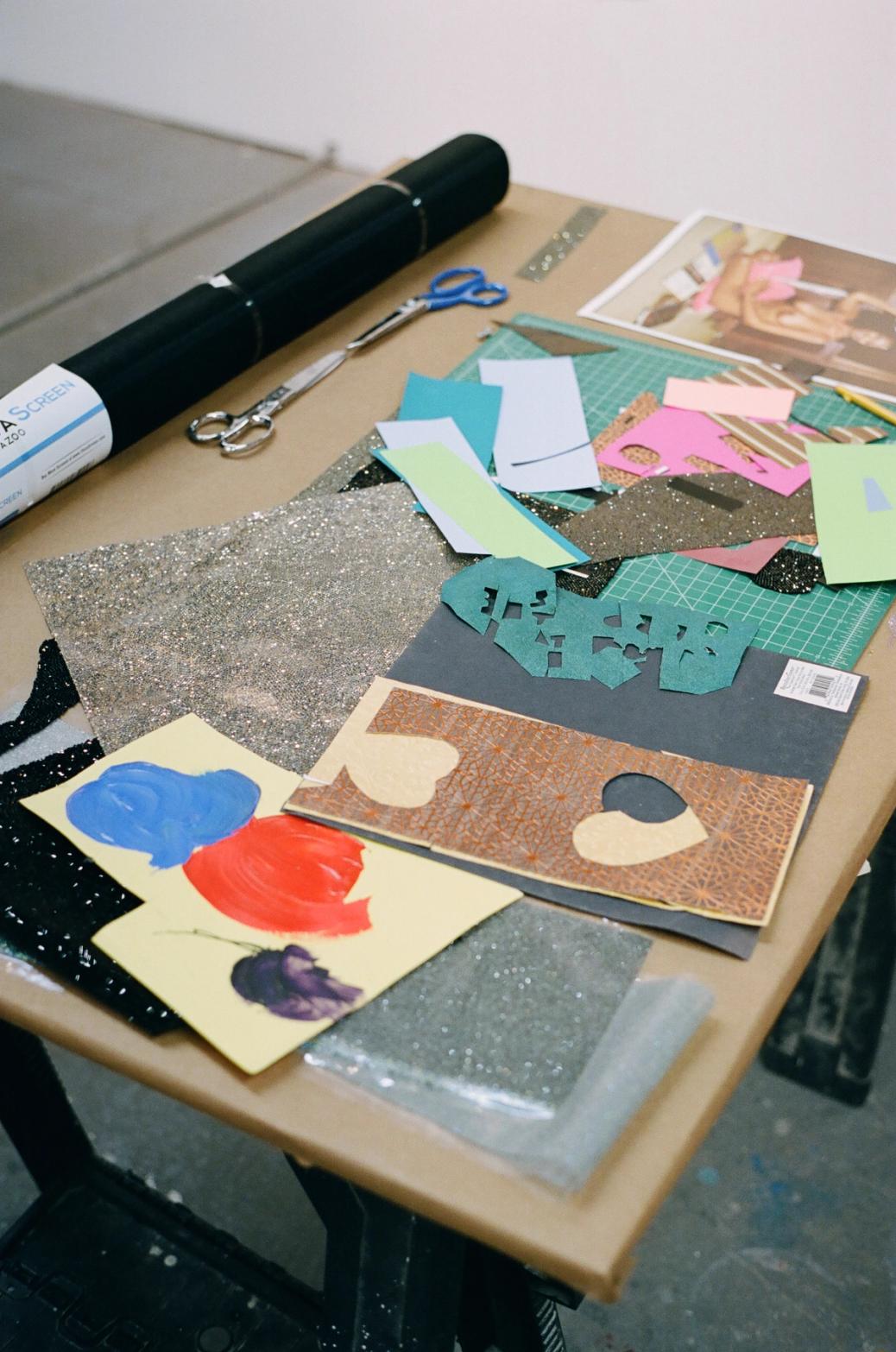
Mickalene recounts Jet magazine as a black, American, cultural media bible, and a fascinating early influence in her life. The magazine’s Beauty of the Week section was “this first notion of beauty” that she viewed equally about who these women are. Her genius is evident in the ability to think in collage, uncovering and playing with layers that reflect life and context, and her use of diverse, bold materials.
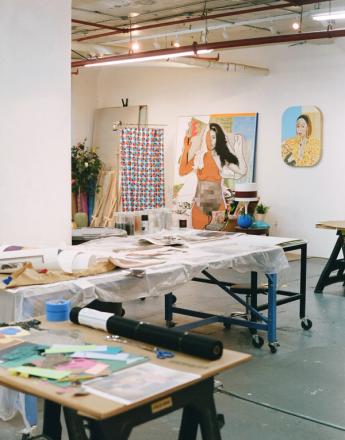
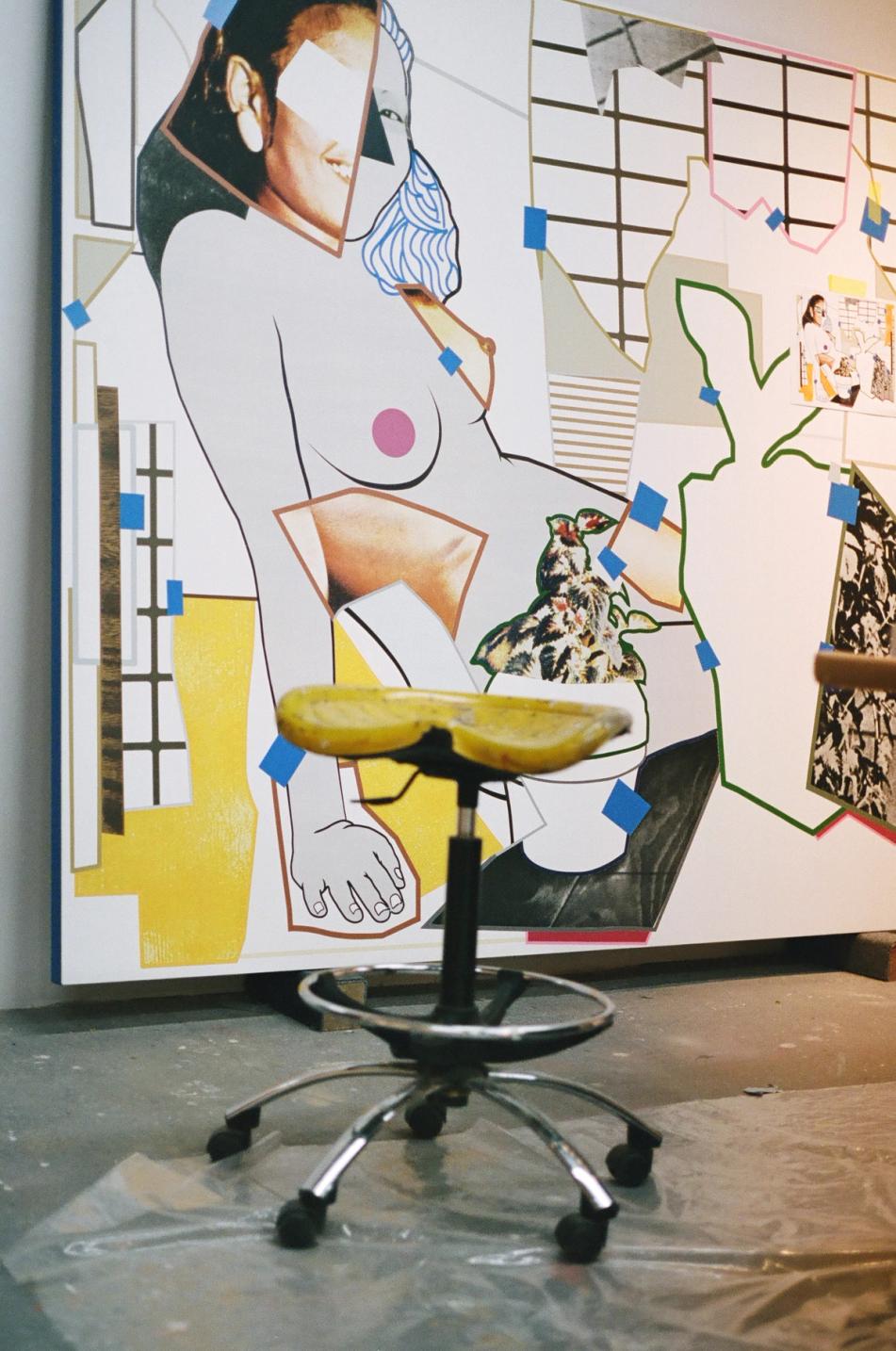
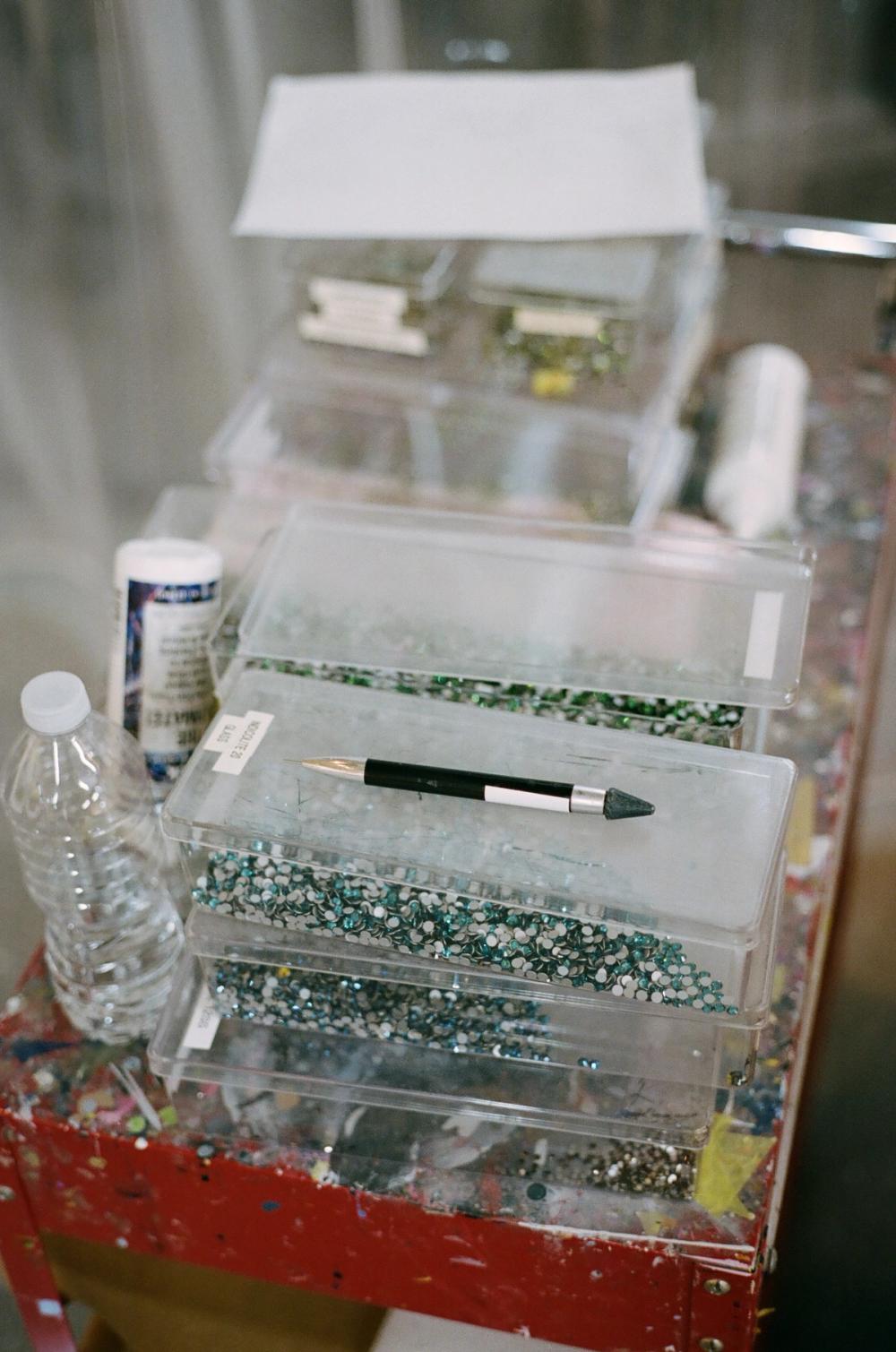
“I wanted to be a painter’s painter. But even working abstractly, collage, I was using different fabric and cutting things and putting on surfaces, but I didn’t really call it collage.” When oils proved not enough for the texture she wanted to incorporate, she used textiles reminiscent of her grandmother and glitter and rhinestones, which were cited with evoking pointillism and Aboriginal dot painting.

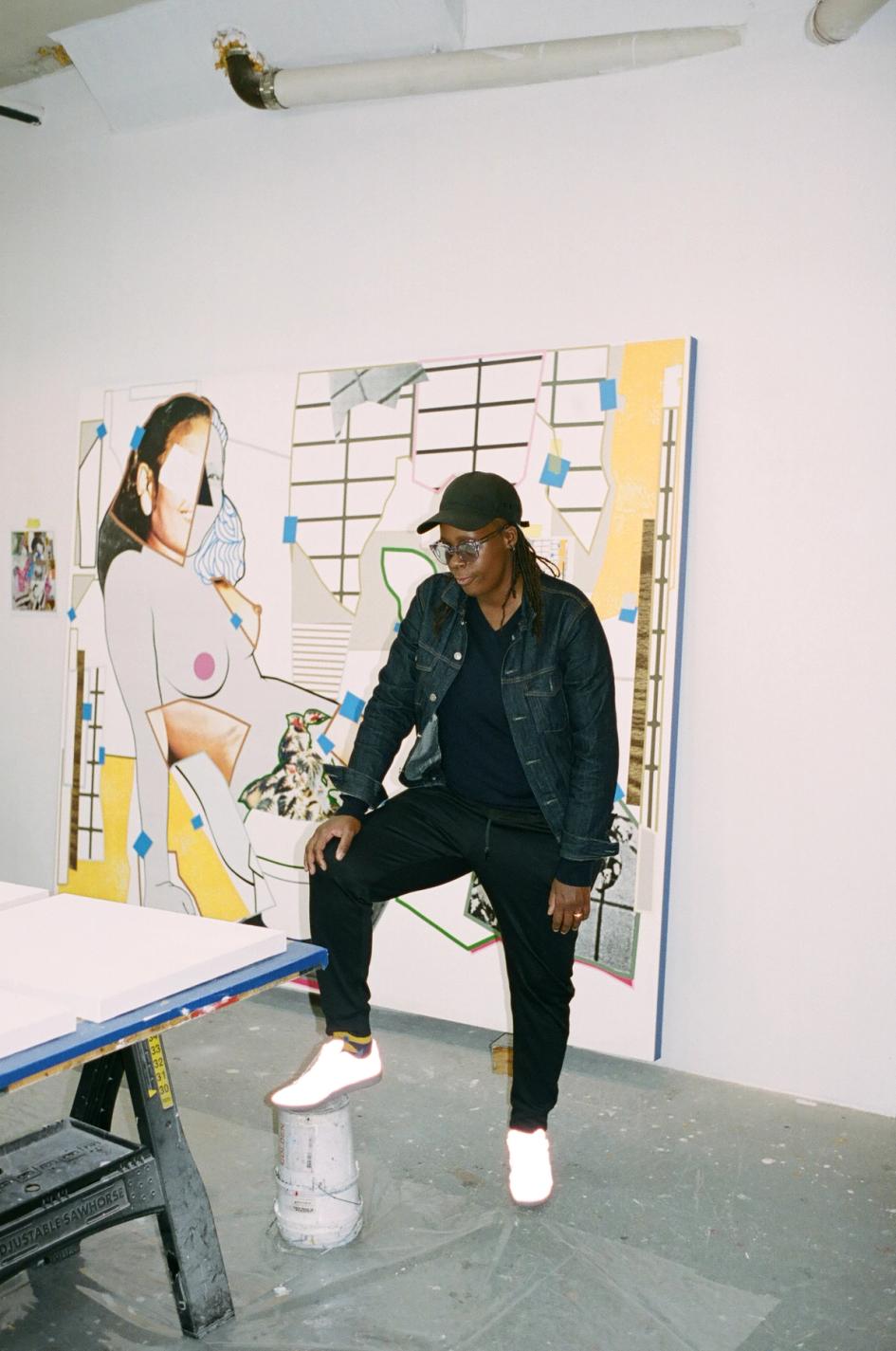
Resulting in both expansive and intimate images, it was a decidedly political and cultural statement beyond corporeal matters. This felt most evident in her first monumental canvas “A Little Taste Outside of Love” in 2007 featuring her then-girlfriend, standing at an impressive 9ft x 12ft. The work directly responds to European nudes such as Ingres’s Grande Odalisque and Titian’s Venus of Urbino. The sheer scale of the work was purposeful in portraying impact. “People need to come in contact with this body, be face to face with it. It is the ultimate sense of validation and the claiming of space.”
Through painting, photography, collage and installation, Mickalene’s strategies include appropriation, whereby deconstructing and repurposing formal and conceptual artistic iconology is developed to re-evaluate its context. Her study of French impressionism, European modernism and pop art plays a formative influence; wherein pioneers including Bearden, Neel, Matisse, Manet and Warhol activate her interest and approach.
Through her time at Yale where she received her MFA, Mickalene was stunned to discover that Manet and Matisse used black and north African models and that Matisse based many of his famous drawings on black women. Recognising history’s removal of these women from the conversation, she restarted it by placing black women in the poses from Western art’s most significant works. For instance, swapping Manet’s Le Déjeuner sur l’herbe with its three clothed men and a nude woman, for three fully dressed, black women oozing a powerful sense of self. “When you remove others from the conversation, you are stating that they don’t exist,” she says. “When you are never seeing yourself, you don’t feel as though you have a place in society.”

The photography classes she was encouraged to take during graduate school were equally transformative. Beginning to look at and thinking about the black body and media, and particular stereotypes around the notions of beauty persuaded her to start thinking about her own body, her own life and her relationship to her mother. Mickalene went back to her hometown of New Jersey, photographing her mother as Pam Grier, as well as photographing herself.
“The need to see myself more in my work, I couldn’t deny it. I remember the day I started to paint myself, and that began by photographing myself as women that I grew up idolising such as Naomi Sims who was a black model in the 70s, one of the first for her time to speak for black women and their wellness.”
Today, the demand for Mickalene’s work and exhibitions keep expanding. Her work is in permanent collections of the Museum of Modern Art, Whitney Museum of American Art, The Guggenheim and the Art Institute of Chicago to name a few. While she receives the overdue appraisal after being sidelined for years, her interests seem to lie more in coaction and sharing.

You can tell by Mickalene’s introduction of herself including the word collaborator how crucial purposefully sharing the spotlight is to her. Better Nights, her exhibition at the Bass Museum during Basel Miami 2019, featured and highlighted over 20 visual artists and performers in an immersive installation, reimagined based on Polaroids she found of her mother. This inclusion of other artists in her exhibitions, most recently Derrick Adams and Devin N. Morris for Baltimore Museum of Art’s Mickalene Thomas: A Moment’s Pleasure, has been hailed as an action with the idea of how the art world can create positive change beyond aesthetics.
However, even Mickalene’s definition of aesthetics is a significant agent for change in and of itself. Her portrayal of beauty is not about the traditional concepts, but rather something more abstract that has to do with perseverance. “These women are defining another way of how we look at what is beauty. Because it is not necessarily just the surface, it is also the action. How they define themselves. And how they withstand circumstance and obstacles. That’s always been something that I look to for women that I am celebrating in my work.” And it is definitely the essence of Mickalene herself as an artist.

Listen